Bees and wasps are commonly encountered, especially during late summer when they are most abundant and more active. In nature, these stinging insects play a beneficial role, particularly as predators of pest insects and as pollinators.
Understanding the basic differences between bees and wasps can help you identify and control potential problems and prevent unwanted stings.
Yellowjackets
Yellowjackets (including hornets) and paper wasps are the most common types of wasps encountered in Washington. Wasps have slender bodies with a narrow waist and appear smooth and shiny. Their feeding habits differ greatly from bees. Most wasps prey on insects, including caterpillars, flies, crickets, and other pests. Although yellowjackets feed on some insects, they readily scavenge on human food and garbage. Their aggressive feeding habits can make them a serious nuisance problem, especially at picnics and campgrounds. Paper wasps do not scavenge and are rarely aggressive. However, their habit of nesting anywhere, and often in frequently used areas, creates problems.
Wasps
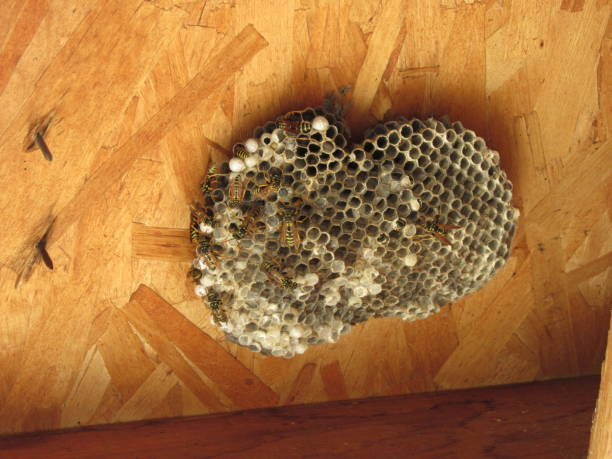
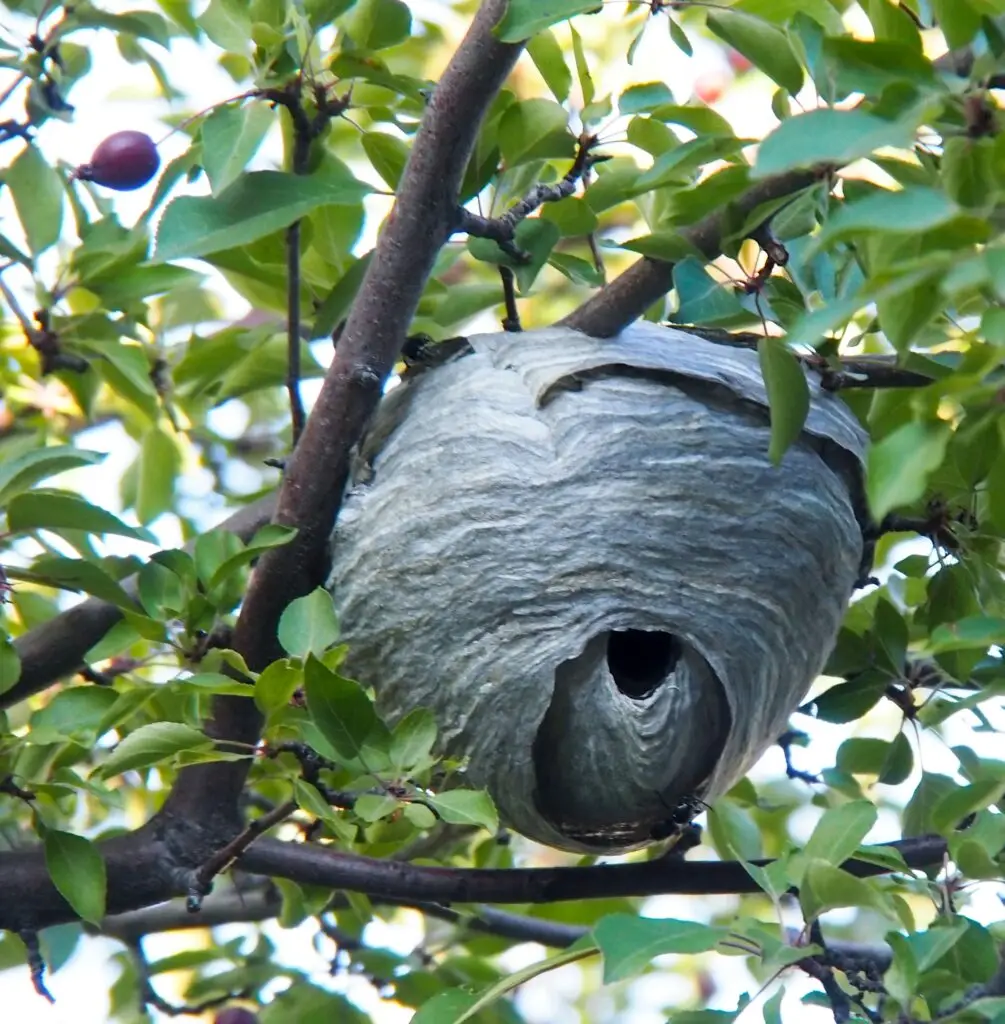
Wasps establish a new colony each spring and almost never re-use their old nest. Both yellowjackets and paper wasps construct paper nest from chewed wood fiber mixed with saliva. A paper wasp’s nest resemble an umbrella consisting of a single comb with open cells. Paper wasps commonly build nests on tree limbs, building overhangs, and beams and supports in attics of garages, barns, and sheds. They also build nests in small cavities of building walls, within metal gutters and poles, and under outdoor furniture. As for yellowjackets, certain types conceal their nests below ground in old rodent burrows, behind exterior building walls, in hollows of children’s playground equipment, or other similar spaces. Other types build large, conspicuous hanging nests in shrubs, trees, or under eaves of buildings.
Like bees, wasps will sting in defense of its colony or itself. In late summer and fall, yellowjackets become aggressive scavengers, sometimes stinging without being provoked. The wasp’s stinger has small barbs which do not embed in the skin. Wasps can sting repeatedly and will often do so if threatened or protecting their nest.
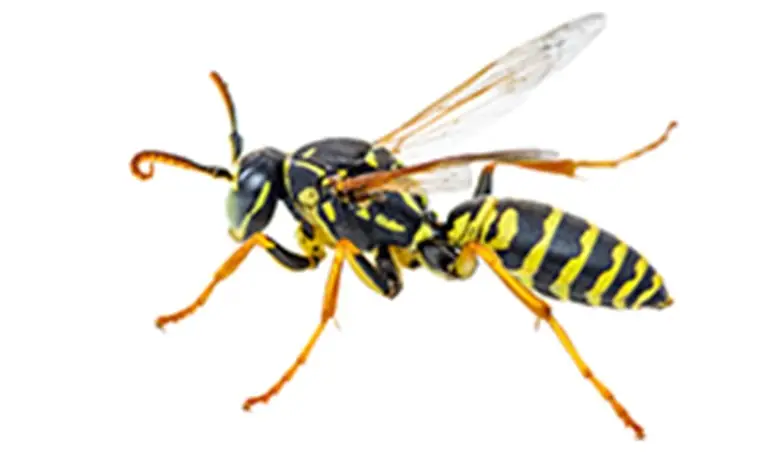
Yellow jackets are sometimes mistakenly referred to as “bees” given they are similar in size and sting, but they are actually wasps. Notice it is strikingly yellow and black in color and hairless.
Yellow jacket colonies become nuisances in the end of summer, but they will die over winter. If they are in a location where they are a problem, you can remove them by calling an exterminator. Some beekeepers will remove them for you, but others work only with honey bees. Again, you can text a photo to a beekeeper to confirm what you have, but only if it’s safe to do so.
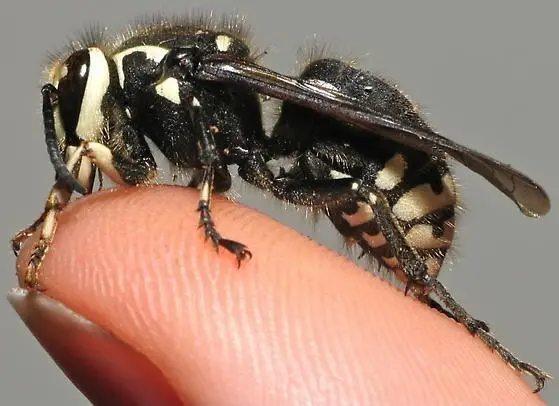
Northern Giant Hornets:
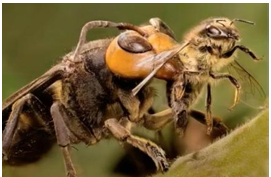
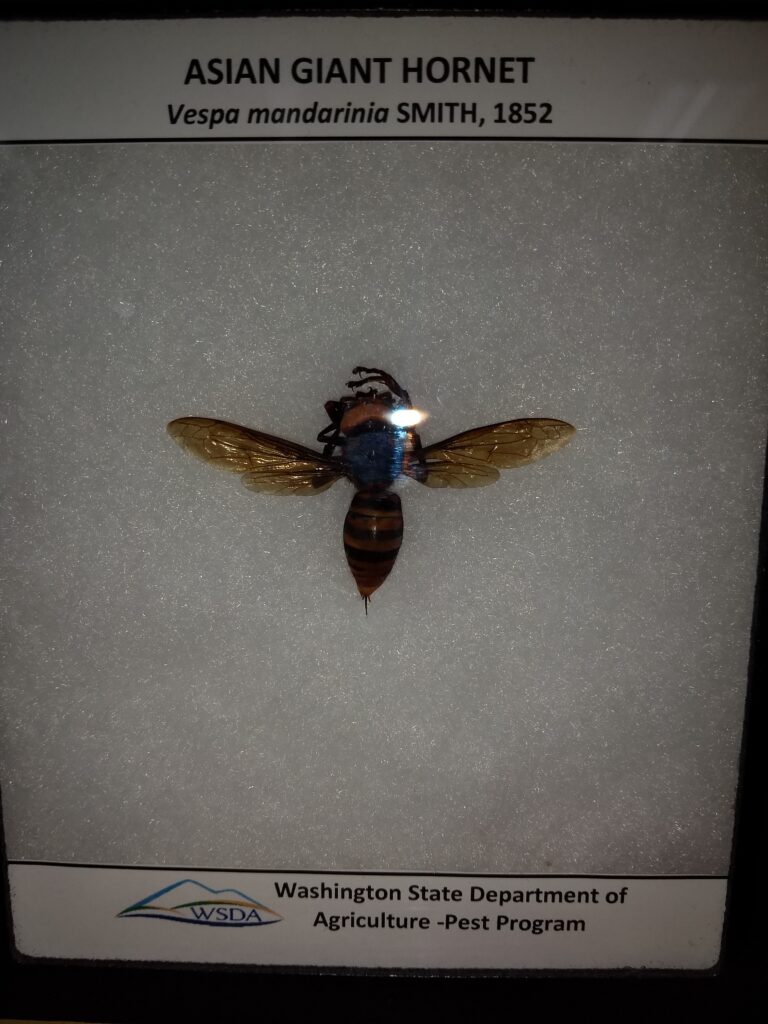
This hornet was found for the first time in British Columbia, Canada and in the northwest corner of Washington State in the Fall of 2019. It poses a significant threat to the honey bee. “It is the world’s largest species of hornet…(and) is well adapted to conditions in the Pacific Northwest.” A group (15 – 30) of NGH can completely overrun a strong colony (30,000 – 50,000) of honey bees within a few hours. Because of the potential damage this insect can cause a significant effort is under way to trap and eradicate them in the area in which they were discovered. Since no further sightings have been reported, we are hopeful that this pest has been eradicated although the situation is being carefully monitored.
Yellow Legged Hornet:
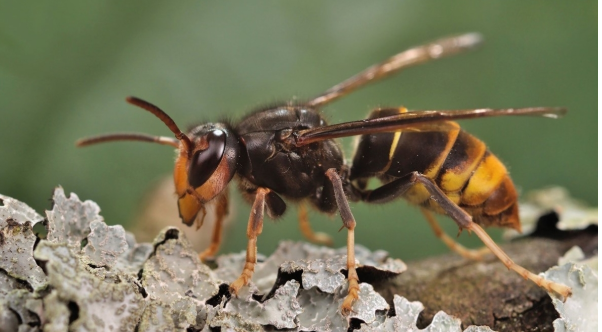
The Yellow Legged Hornet has been found along the south east coast of the US and could become a threat to Honeybees in Washington State.
For USDA information about this hornet follow this link.
Link to the website Bees, Ants and Wasps of Washington
Copyright © 2026 Stanwood Camano Beekeepers Association