At the Stanwood Beekeepers Association, we are dedicated to helping honeybees. If you have a swarm of honeybees you would like to have removed from your property, we would love to help you if it is possible to capture that swarm.
Most beekeepers will work with honeybees but not other types of wasps and hornets. Before you call a beekeeper, please scroll down to read the information below to determine whether you’re dealing with honeybees or some other insect.
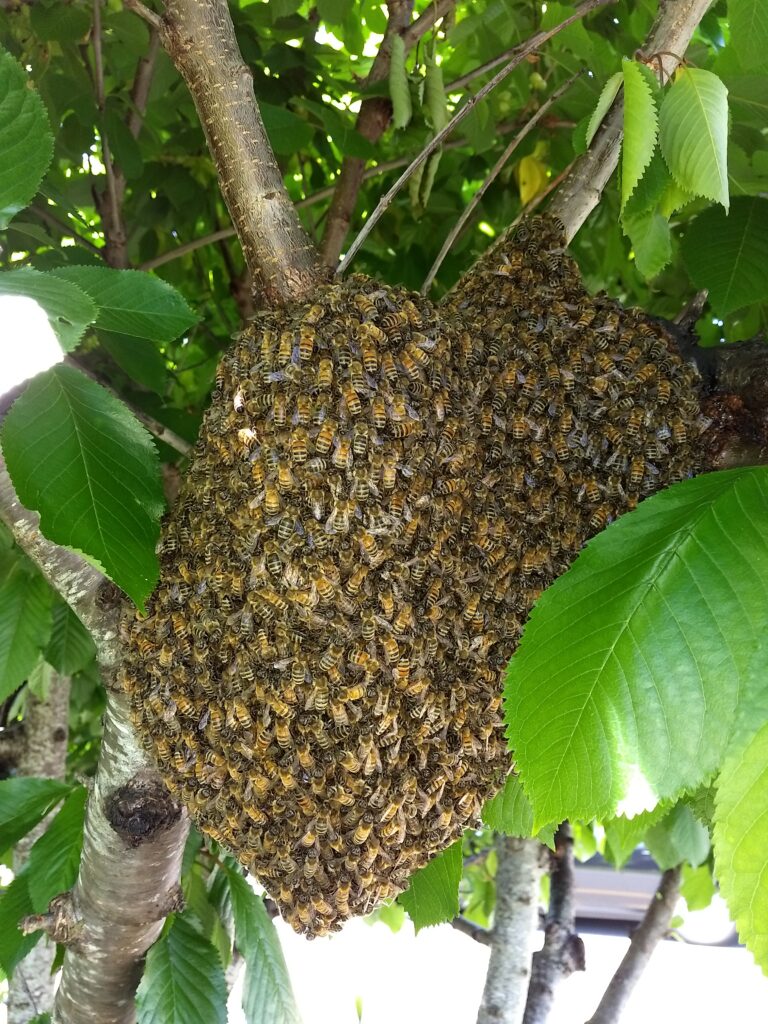
Honeybees
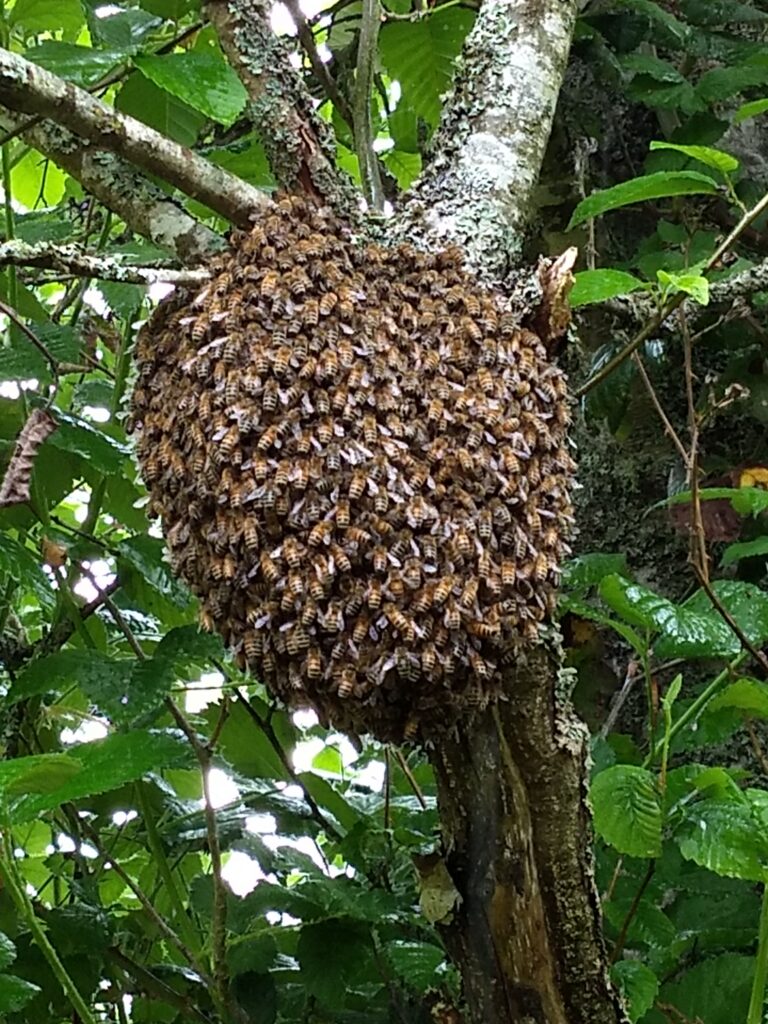
This is what a swarm of Honeybees looks like
Not Honeybees
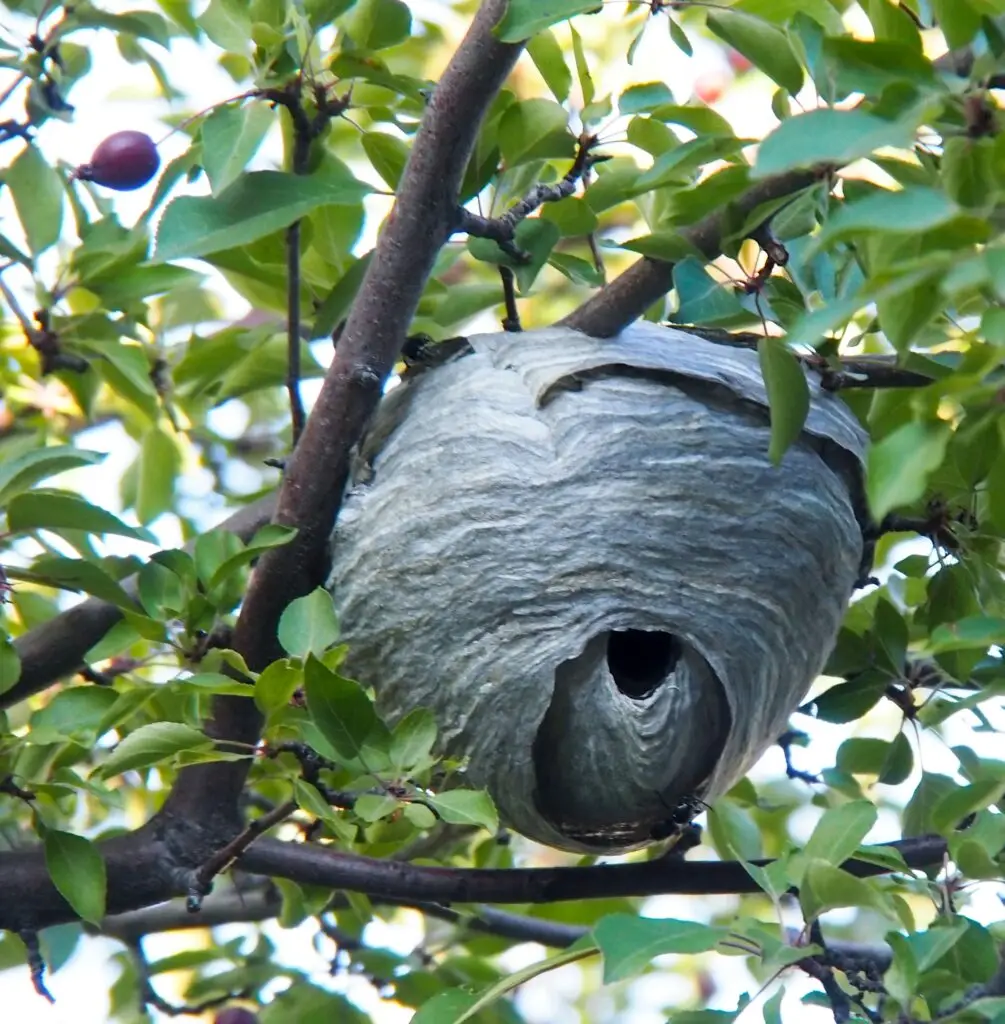
This is a Bald Faced Hornet nest
THESE ARE NOT HONEYBEES
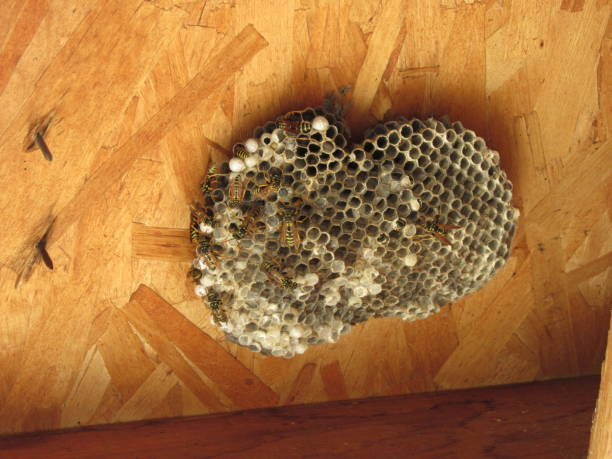
And this is an Umbrella Wasp nest
THESE ARE NOT HONEYBEES
This is a Honeybee (Apis Mellifera).
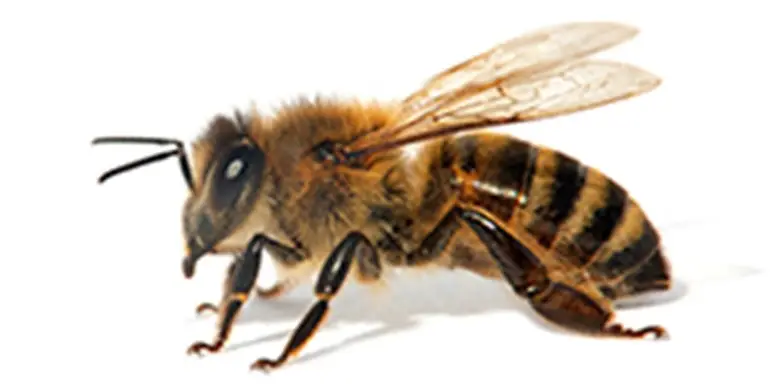
You’ll notice this honeybee is fuzzy and amber and brown striped (not yellow and black). Not sure what you have? Only if it is safe to do so, text a photo (even of a dead one) to a beekeeper to confirm.
If your bees look like the fuzzy honeybee above, then you can call a beekeeper. Even though honeybees are lovely and help pollinate our food, they can be problems when they take up residence in our homes.
The most commonly seen bees in Washington are the honey bee and bumble bee. Bees feed on pollen and nectar, and their foraging activity help ensure the pollination of flowering plants. It is estimated that one third of our food supply depends on insect pollination, most of which is done by bees.


Bees have robust and fuzzy bodies compared with wasps, which serve to enhance their pollen gathering.
Colonies
Honey bees live in perennial colonies that nest in crevices of large trees, voids of building walls, or other protected areas. Unlike honey bees, bumble bees establish new colonies each spring. They prefer to build their nest in abandoned mice burrows, small cavities in building walls, or other similar spaces.
Both the honey and bumble bee can sting and will aggressively defend their colony. While foraging, bees are rather passive and rarely sting unless severely provoked. When a honey bee stings, it is just once. Their strongly barbed stinger lodges in the skin, then tears from the bee’s body when it flies away – this causes the death of the bee. The bumble bee’s stinger however lacks barbs, so it can sting repeatedly.
Swarms
Honey bees swarm when they are searching for a new home. If you find a swarm on your property or a honey bee nest is suspected, capturing a specimen or taking a good picture and getting it identified is an important step to verify what insect is actually present. If the specimens are confirmed to be honey bees, first consider contacting a beekeeper for help with the removal of the colony. A list of beekeepers in Washington who are willing to remove a honey bee colony or swarm can be found on Bee Removal Source website. You can also find assistance to remove a honey bee swarm at the Washington State Beekeeper’s Association’s website.
Reporting Swarms of Honeybees
Several of our members have bee vacuums that are able to reach up to about 25 feet above the ground.
Please contact any of the beekeepers listed below to remove swarms of Honeybees:
Art Peterson (425) 232-8830
blue608@aol.com
Chris Vigars (415) 309-2352
cvigars50@gmail.com
Von McLaughlin (360) 631 8600
vonmclaughlin@yahoo.com
Luke Jackson (210) 646-1802
Luke.taylor.jackson@gmail.com
Terry Bettendorf (937) 750-9932
tbettend@gmail.com
Steve Winchell (425) 501-9701
steve.winchell51@gmail.com
It would be helpful if you could send a photograph of the swarm either as a text message or an email so that we can determine if it is honeybees and not yellow jackets or bumblebees.
Copyright © 2026 Stanwood Camano Beekeepers Association